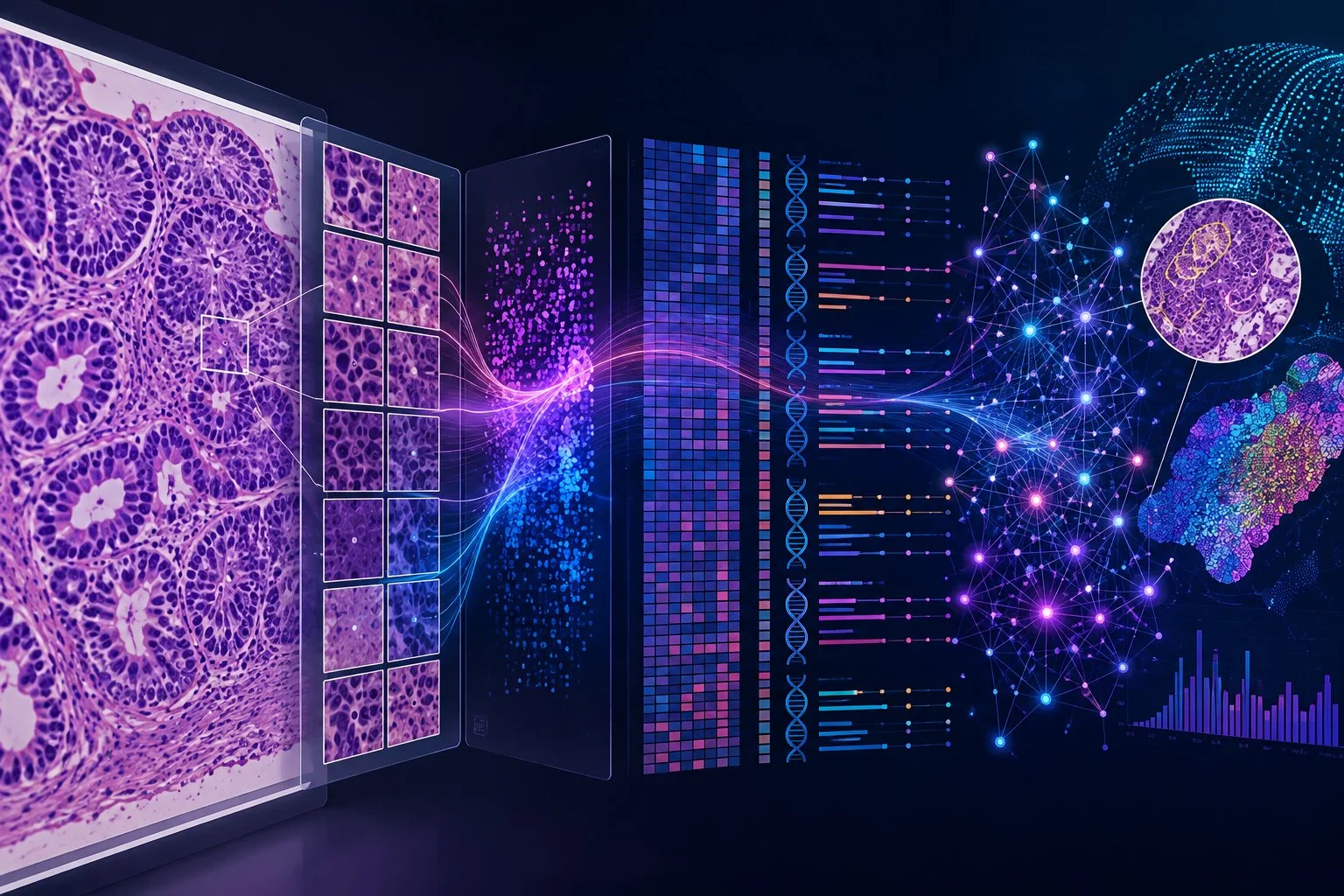

FROM DIGITAL IMAGES TO DIGITAL INTELLIGENCE
OmniPathology continues to expand its digital pathology capabilities, building beyond digital scanning toward advanced image analysis, molecular integration and AI-assisted pathology.
At OmniPathology, innovation is not simply about adopting new technology. It’s about finding new ways to transform pathology, enhance clinical decision-making and create greater value for our physician and laboratory partners.
Last year, we announced our collaboration with Gestalt as our image management system (IMS) provider as we embarked on an ambitious expansion of our digital pathology capabilities.
Since then, we have successfully deployed digital scanning and image management across our GI pathology workflow. This has created a strong foundation for the next generation of pathology services.
But we’re not stopping there.
EXPANDING THE POSSIBILITIES OF DIGITAL PATHOLOGY
Building on the success of our GI digital pathology program, OmniPathology is now exploring and developing new applications that extend the value of digital pathology beyond image management alone.
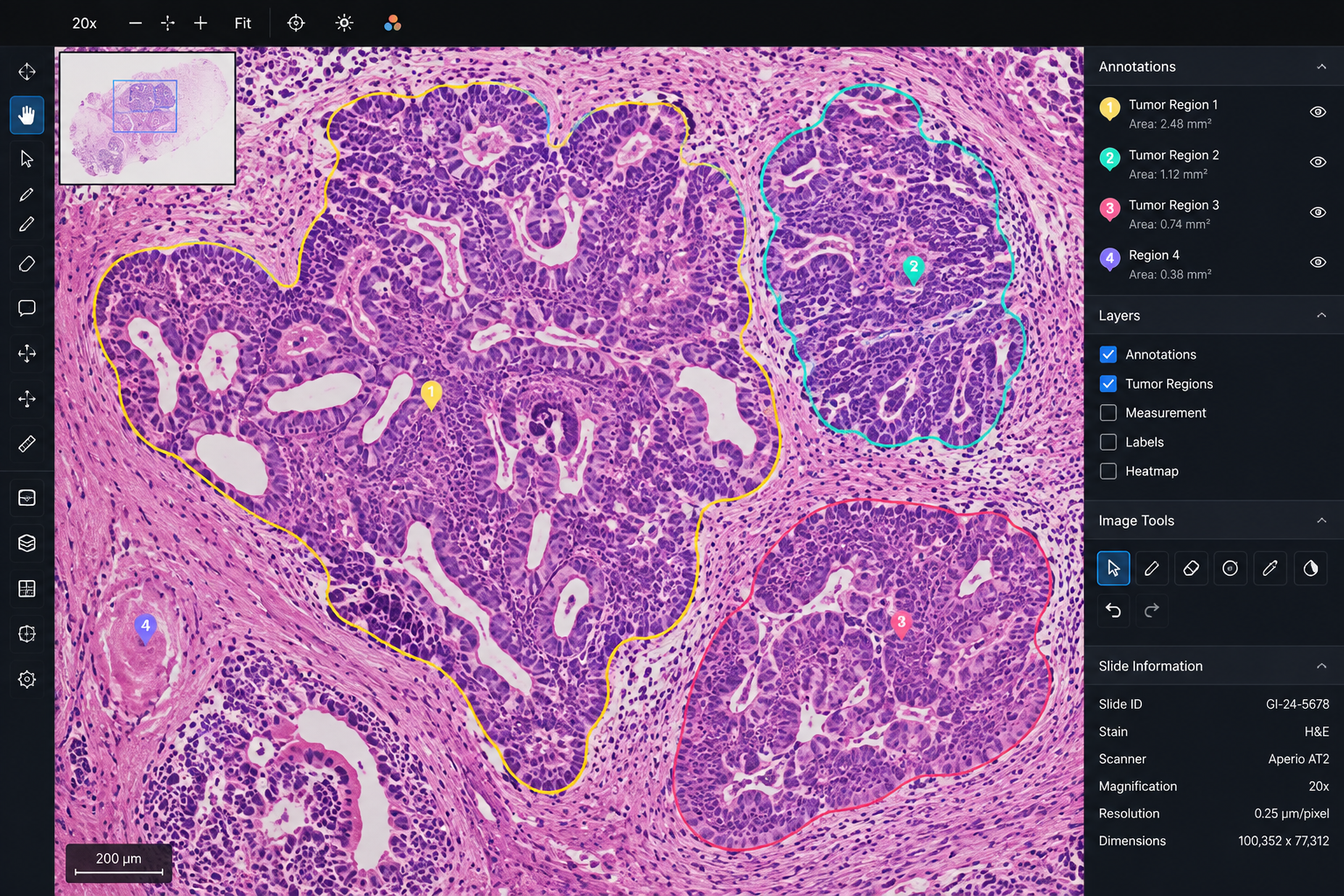
DIGITAL TUMOR ANNOTATION & MOLECULAR DIAGNOSTICS
We are working with an oncology enterprise on digital tumor annotation to support molecular diagnostics, helping connect advanced image analysis with the increasingly sophisticated molecular characterization of cancer.
As pathology and molecular diagnostics become more closely integrated, digital tools can create new opportunities to connect what is seen in tissue with the molecular information that can help inform clinical decision-making.
IMAGING OPTIMIZATION FOR INFECTIOUS DISEASE
OmniPathology is also evaluating new imaging optimization approaches for infectious disease. We are exploring how digital imaging can potentially enhance the visualization, interpretation and clinical utility of infectious disease pathology.
These efforts reflect our broader commitment to identifying areas where digital technologies can meaningfully enhance the information available to pathologists and clinicians.
EXPLORING THE ROLE OF ARTIFICIAL INTELLIGENCE
At the same time, we are engaging with several leading digital pathology and AI organizations to explore opportunities to develop and integrate next-generation AI tools into pathology workflows.
Our goal is not simply to implement AI for the sake of adopting new technology. We are focused on identifying applications where artificial intelligence can meaningfully augment the expertise of pathologists, improve efficiency, support more consistent interpretation and ultimately generate actionable clinical insights.
WHAT BECOMES POSSIBLE AFTER PATHOLOGY BECOMES DIGITAL
Digital pathology is about much more than replacing glass slides with digital images.
The greater opportunity lies in what becomes possible after pathology becomes digital:
Advanced image analysis. Quantitative pathology. Tumor annotation. Integration with molecular data. AI-assisted interpretation. Remote collaboration. New clinical services.
Our continued investments in digital pathology are designed to help build that broader ecosystem, one in which pathology information can become increasingly connected, quantitative and clinically actionable.
The future of pathology will be increasingly connected, quantitative, molecular and intelligent. OmniPathology is actively working to help shape that future.
We look forward to sharing more about these initiatives and the next generation of digital pathology solutions as they continue to develop.