

Omni’s Rapid, FDA-cleared Molecular testing to identify Enteric Pathogens
With summer upon us, we are enjoying travel, BBQs, swimming, surfing, and other activities with family and friends. However, these fun encounters can increase exposure to enteric pathogens in contaminated food and water which can develop into acute or chronic enteritis.
One of the most common reasons patients visit the gastroenterologist is acute diarrhea.
The four main sources of infectious diarrhea are the following:
Enteric Bacterial infections are common in patients who have traveled to resource-challenged countries, or who have ingested contaminated food or water. Symptoms may include fever and/or visible blood in the stool and abdominal pain.
Viral enteric infections often present with vomiting and non-bloody diarrhea lasting 2-3 days. These infections are generally self-limiting and clear up in a few days.
Enteric Parasites are common in patients who have travelled to resource-challenged countries. Patients usually present with persistent or chronic diarrhea.
C. difficile infection is common in patients who have resided in healthcare or long-term care facilities or who have recently undergone antimicrobial therapy.
Being able to accurately diagnose the source of the infection is important, as treatments will vary widely depending on whether the pathogen is a bacterium, virus, or parasite.
INTRODUCING OUR COMPREHENSIVE STOOL PATHOGEN PANELS
OmniPathology, a leader in GI pathology, has adopted the FDA-cleared BD MAX molecular platform to rapidly and accurately identify the most common bacterial, viral, and parasitic pathogens causing infectious enteritis. Results are available within 24 hours.
Real-time PCR (RT-PCR) is extremely rapid, reproducible, and accurate, and eliminates the need for traditional methods of identification such as culture and microscopy, which can be time consuming, subjective, and dependent on the viability of the pathogens for growth and analysis.
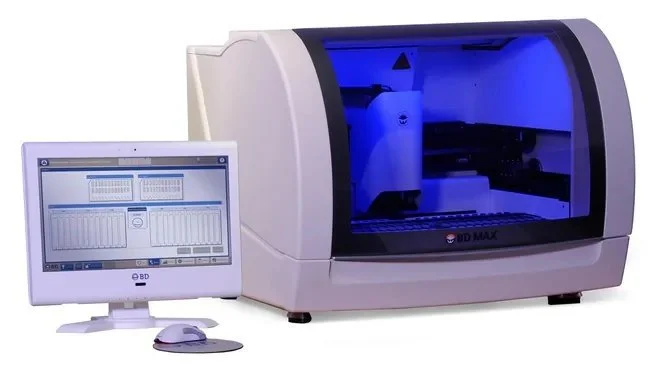
Following the Infectious Disease Society of America (IDSA) Guidelines, each syndromic panel is specifically designed to identify pathogens with >91.7% positive precent agreement (PPA) and >97.5% negative percent agreement (NPA) compared to standardized reference methods.
The C. difficile assay has a sensitivity of 87.6% and specificity of 95.5% compared against direct and enriched culture reference methods.
OmniPathology provides a patient self-collection kit with easy-to-follow instructions for collecting a stool sample.
For more information, please visit our website at:
https://www.omnipathology.com/bd-max-enteric-pathogens-panels